Artist Profile
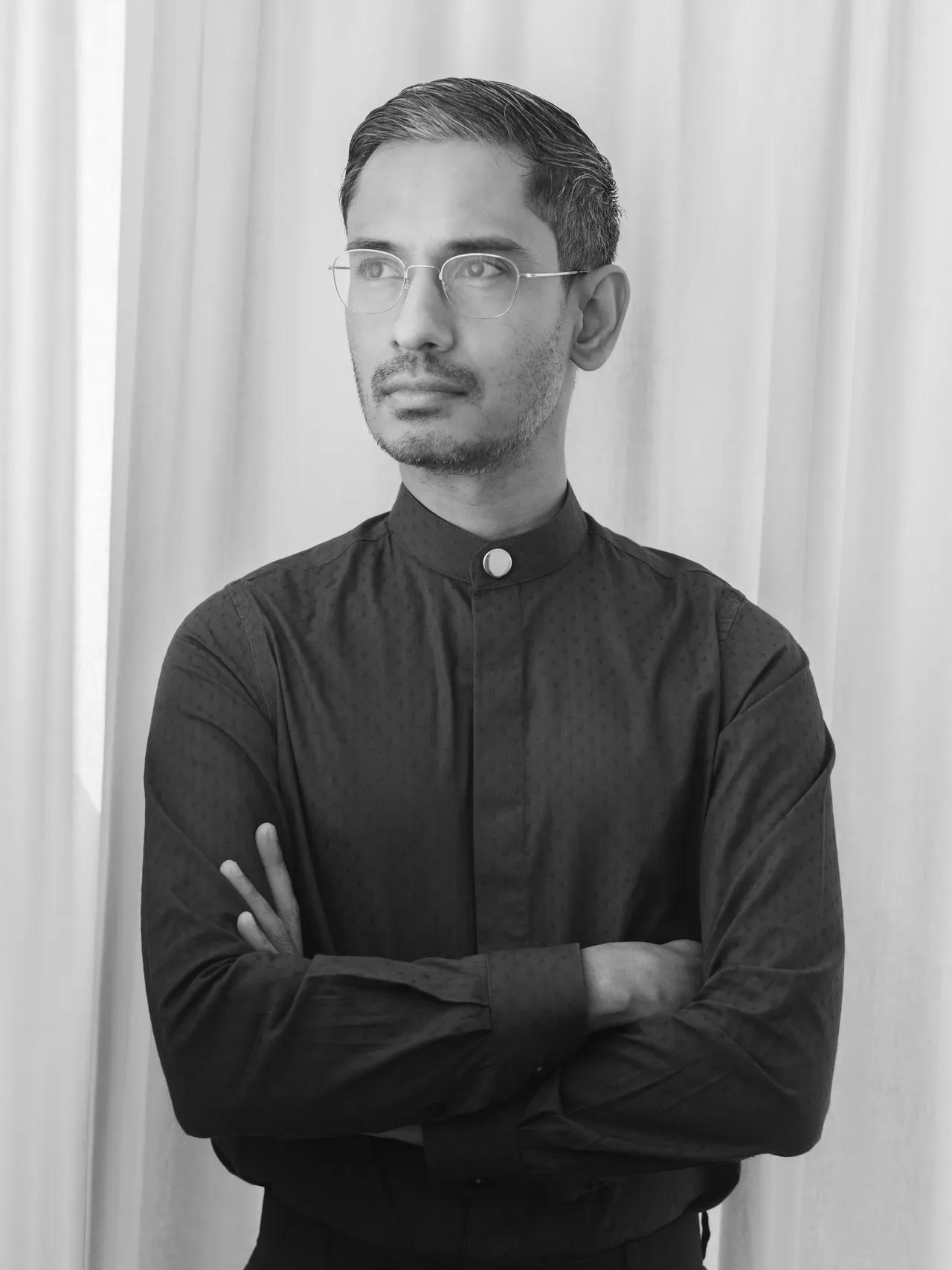
I am a self-taught artist whose practice has evolved alongside formal training as an architect. While architecture taught me to think critically about space, history, materiality, and the built environment, my artistic practice has become a space for speculation and inquiry beyond the constraints of architecture. The disciplines continuously inform one another: architecture provides a framework for understanding systems of power and human behaviour, while art allows me to question, reinterpret, and imagine them through narrative, symbolism, and visual experimentation.
My practice investigates the relationship between objects of power and desire, and the ways in which they shape, reflect, and are transformed by the social, political, and cultural structures that surround them. I am interested in how architecture, ritual objects, landscapes, textiles, ornaments, and symbols become instruments through which authority is established, identity is negotiated, and aspiration is expressed. Rather than treating these objects as static artifacts, I approach them as active participants in society, constantly accumulating new meanings as they move across time, class, and culture.
The practice is equally concerned with the decolonization of visual knowledge. I seek to rediscover and modernize traditional Sri Lankan painting techniques, not through replication or nostalgia, but by understanding their underlying systems of making, perception, and representation. Temple murals, manuscript paintings, textile traditions, ceremonial decorations, and indigenous methods of image construction provide both technical and conceptual foundations for my work. Their spatial conventions, symbolic compression, layered narratives, and handcrafted surfaces offer alternative ways of seeing that stand apart from inherited Eurocentric artistic conventions.
Projects such as Gaman Maliga explore architecture as a political and cultural construct. Conceived as both an imagined palace and a metaphor for perpetual transition, it examines power not as something fixed, but as something continually performed, inherited, and displaced. The work questions how monuments and institutions become repositories of collective memory while simultaneously revealing the fragility of authority itself.
Colour occupies a central role within this process. It plays a critical role in shaping the atmosphere of the work. The palette is informed by traditional temple murals, regional textile systems, and the chromatic logic of ceremonial fabrics and decorative arts across Sri Lanka. These references generate a visual field that is simultaneously grounded in cultural memory and transformed into symbolic abstraction. Rather than adopting universalised palettes, I derive chromatic relationships from Sri Lankan mural traditions, woven textiles, ritual objects, natural pigments, and regional craft practices. These combinations carry cultural memory while allowing new visual languages to emerge, connecting historical knowledge with contemporary expression.
Underlying the entire practice is the aesthetic philosophy of Rasa one of South Asia’s oldest theories of art and perception, articulated over two millennia ago in the Nāṭyaśāstra […]
Through this framework, I seek to contribute to a contemporary visual language rooted in Sri Lankan knowledge systems while remaining engaged with global artistic discourse. My work is not an attempt to reconstruct the past, nor to reject modernity, but to demonstrate that indigenous theories, techniques, and aesthetic principles remain living sources of innovation. By bringing together architecture, painting, craft traditions, and regional philosophy, I aim to create works that reveal how cultural memory can become an active force in imagining new futures. The work incorporates a diverse range of figurative forms, from monumental figures to smaller, more intimate bodies. Through these varying scales, the Gaman Maliga and its associated vessels of authority engage with multiple layers of society, constructing a complex visual field in which power is constantly negotiated. These figures represent different social positions and their varied responses to the structures of authority embodied by the Gaman Maliga. As sovereignty moves through society, its reception is never uniform. Some groups embrace its narratives, symbols, and promises of order. Others question, resist, reinterpret, or openly oppose them. These responses are shaped by lived experience, social positioning, and proximity to power.
The work explores how these multiple layers of society interact not only with the central structure of authority but also with one another. Within this dynamic field, identities are not fixed; they are produced through relation, tension, and exchange. The presence of authority becomes a catalyst through which communities define themselves, negotiate belonging, and transform their position within a larger sociopolitical order. The visual language draws inspiration from the mythical birds of Sri Lanka and the wider South Asian region, as well as from ritual performance traditions of southern Sri Lanka, particularly healing ceremonies and Gammaduwa performances. Special attention is given to the Thelme and Telkacchi traditions, whose embodied gestures, choreographies, and symbolic structures inform the construction of the figures.
Costumes within the work are derived from these ritual systems but are not literal reproductions. Instead, they are reinterpreted and recontextualised within a contemporary visual framework. The figures are further adorned with abharana, which function not as ornament alone but as markers of identity, authority, status, and cultural belonging. These elements operate as semiotic devices that communicate social position and political influence.
Architectural references throughout the work draw from Sri Lanka’s historical religious and royal built environments. These include the image houses of Polonnaruwa, particularly Lankatilaka, as well as Kandyan-period structures such as Lankatilaka Vihara, the Dalada Maligawa complex, and the Vishnu Devalaya in Kandy. These architectural fragments provide a spatial language through which ideas of sovereignty, sacred order, and continuity are explored.
While the work is deeply rooted in historical, ritual, and architectural references, none of these elements are presented literally. Instead, all forms, figures, birds, structures, landscapes, and ornaments are highly stylised and reconfigured. Through this process of transformation, familiar cultural symbols are reassembled into a contemporary visual mythology that reflects on movement, authority, identity, resistance, and the ongoing negotiation of power.
Academic Qualifications
- Higher Diploma in Architecture from City School of Architecture (Colombo) Ltd in 2015
- Graduated from University of West of England (M.Arch) UWE in 2015
- Diploma in Architecture from City School of Architecture (Colombo) Ltd in 2012
- Graduated from University of West of England (BSc) UWE in 2012
Professional Qualifications
- Chartered Architect AIA (SL) 2017 Associate Member at Sri Lanka Institute of Architects (SLIA)
- Registered as a Chartered Architect at Architects Registration Board (ARB)
- RIBA Part II, 2015
Publications and Exhibitions
- The Dance of a Water Garden, Solo Exhibition at Paradise Road Gallery Café (2025, January)
- Boy in Paradise, Solo Exhibition at Paradise Road Gallery Café (2021, October)
- Geoffrey Manning Bawa Decolonizing Architecture. (2010 - 2018) Principal photographer, freehand sketch artist, book cover designer and layout design in collaboration
- The Architectural Heritage of Sri Lanka, measured drawings from the Anjalendran studio. (2015)